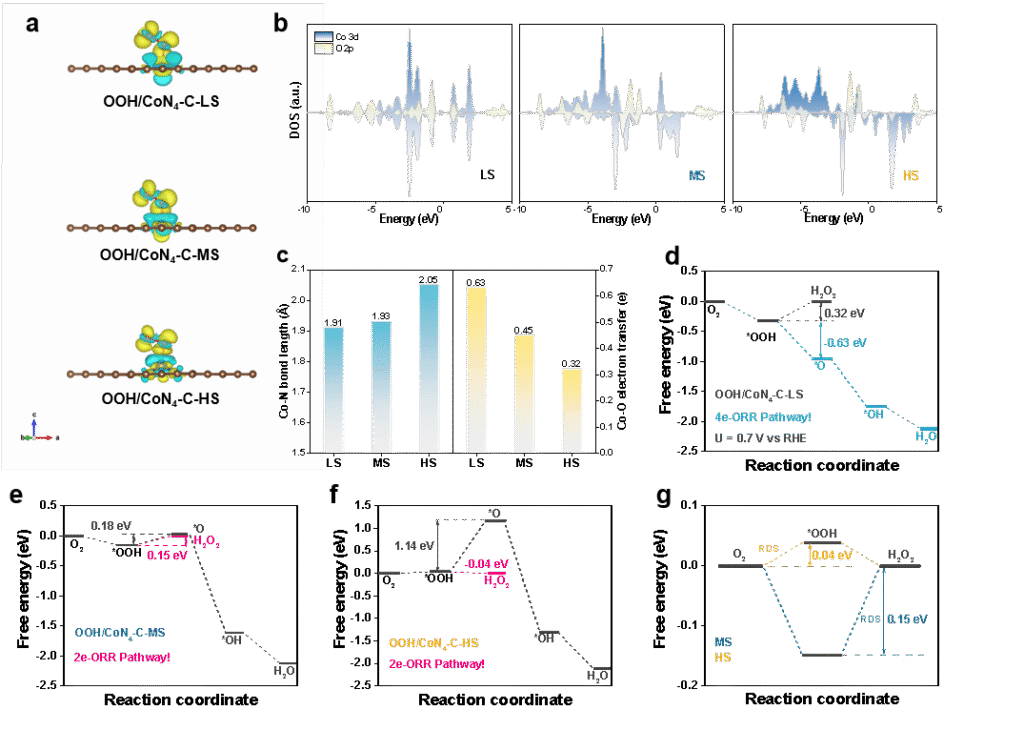


Hydrogen peroxide (H2O2) As a green oxidant, it is crucial in fields such as wastewater treatment and chemical synthesis. The traditional anthraquinone method produces H2O2High energy consumption, lots of by-products, and large carbon emissions, whereas electrochemical oxygen reduction under acidic conditions (2e ORR, O2 + 2e + 2H+ → H2O2With the advantages of low carbon and in-situ production, it has become an ideal alternative. Among them, *OOH is a key intermediate in the ORR process, and the adsorption strength of *OOH on active sites determines whether ORR follows the 2-electron or 4-electron path and its activity. On one hand, if *OOH adsorbs too weakly on the active site, the electrocatalytic process is hard to start, leading to low catalyst activity. On the other hand, if *OOH adsorbs too strongly, the O-O bond can easily break, leading to the 4-electron ORR process and poor 2-electron ORR selectivity. So, figuring out how to tweak the catalyst's electronic structure so that *OOH adsorbs just right on the active site is the main challenge in developing highly active and highly selective acidic 2-electron ORR catalysts.
Researcher Yang Hui's team at the Shanghai Advanced Research Institute of the Chinese Academy of Sciences, together with Ningbo Zhongke Kechuang, used active gases to create a 'drag effect' on metal atoms, lengthening the coordination bond between Co and N atoms and inducing a high-spin electron configuration on the Co-3d orbitals, resulting in a high-spin CoN.4-C catalyst (CoN)4-C-NH3)。CoN4-C-NH3Solved *OOH in traditional CoN4The problem of too strong adsorption on the C catalyst and low 2e ORR selectivity is showing excellent 2e ORR electrocatalytic activity (0.698 V vs. RHE) and H2O2Selectivity (91.4%), and showing very high current Faradaic efficiency (91%) in flow cell applications. The related results were published as "Engineering spin state of CoN"4The paper titled '-C single atom catalyst for acidic electrosynthesis of hydrogen peroxide' was published in Nano Energy, and the first author is Dr. Zhu Yanping from Ningbo Zhongke Kechuang.
Paper link: https://doi.org/10.1016/j.nanoen.2025.111142
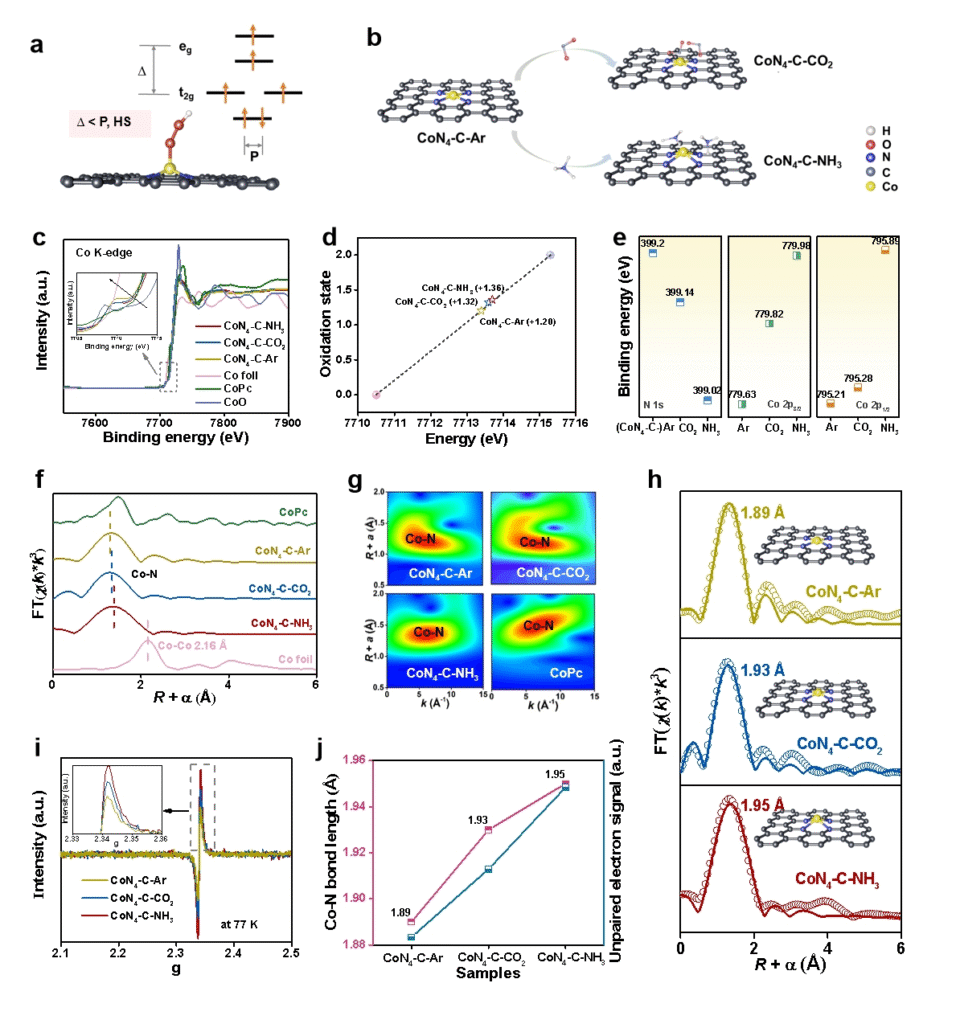
Figure 1. CoN4-C-Ar/CO2/NH3Catalyst Structure Design and Electronic Structure Analysis
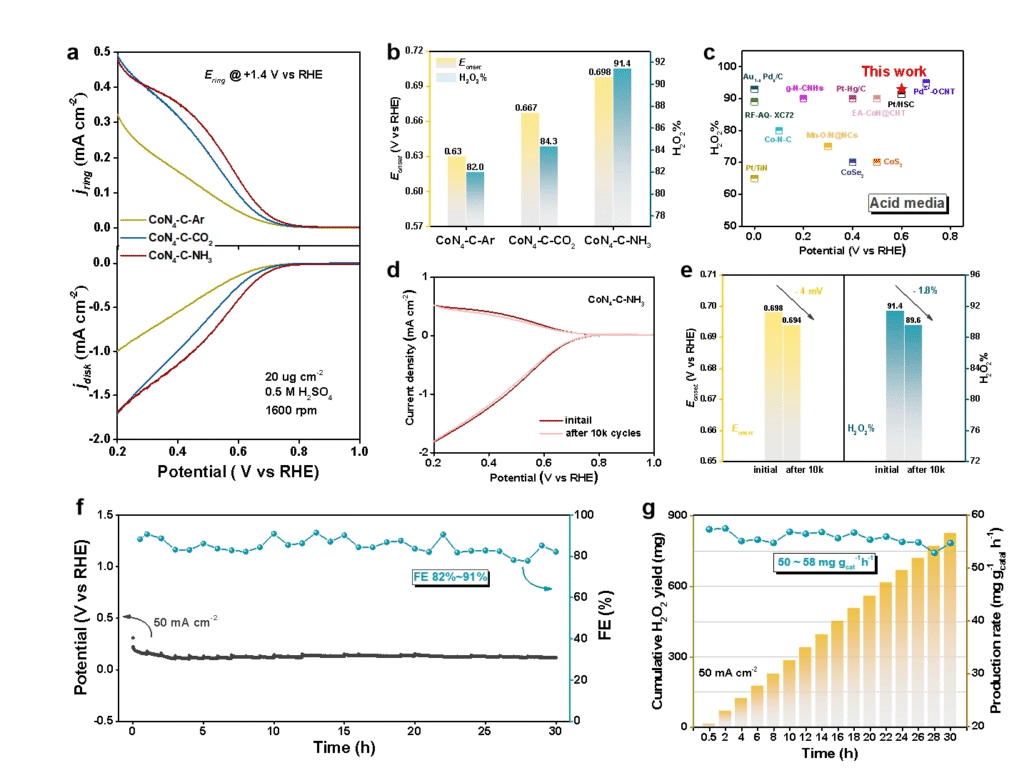
Figure 2. CoN4-C-Ar/CO2/NH3Catalyst Electrocatalytic 2e ORR Performance and Flow Cell Application Data
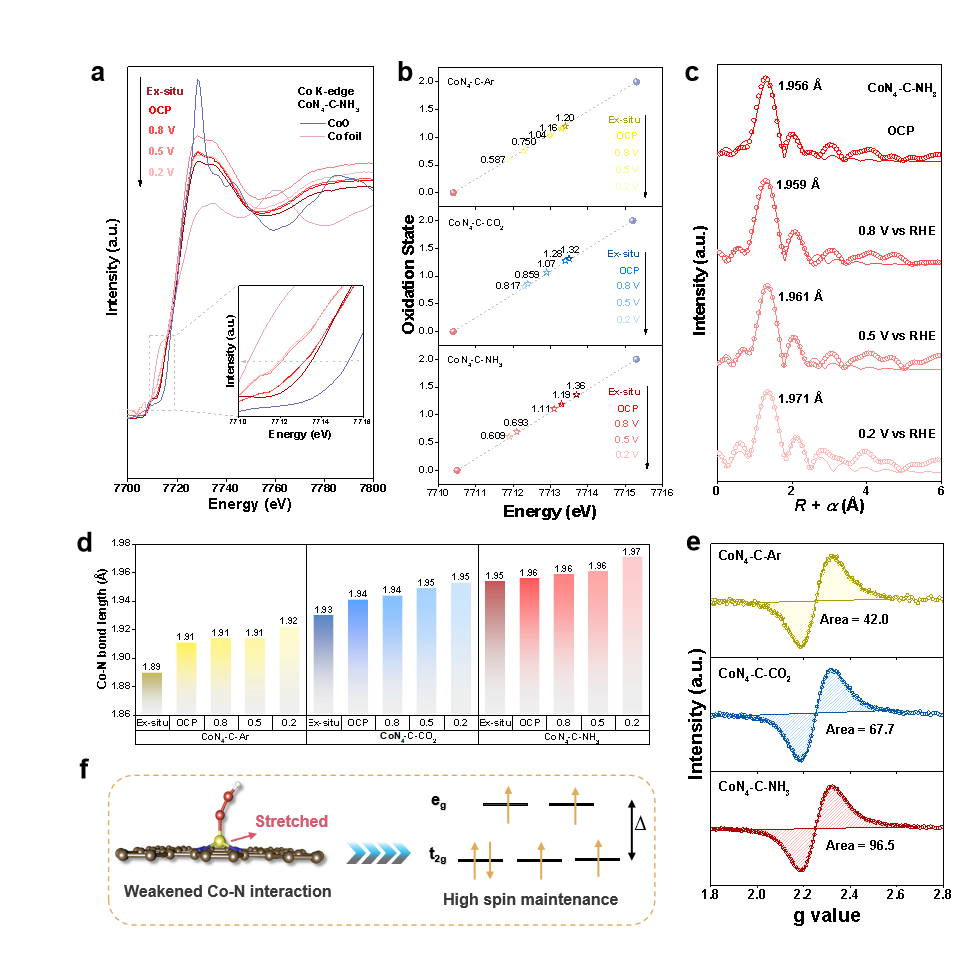
Figure 3. CoN4-C-Ar/CO2/NH3In situ spin state characterization of catalysts